
Switching to a tankless water heater is one of the smarter investments a homeowner can make. No standby heat loss, endless hot water on demand, and a lifespan that can stretch well past 20 years when the unit is properly cared for. But that last part — “properly cared for” — is where many homeowners fall short.
Tankless water heaters do not require the same maintenance as traditional tank units, but they are not maintenance-free either. Skipping annual service in a hard water area like Morris County, NJ can cut a unit’s efficiency and lifespan significantly. This guide covers everything you need to know about tankless water heater maintenance — what needs to be done, how often, and what is best left to a certified professional.
Why Tankless Water Heater Maintenance Matters
A tankless system heats water on demand by passing it through a heat exchanger — a compact component with narrow water channels that are highly efficient but also highly susceptible to mineral buildup.
New Jersey’s water supply, particularly throughout Morris County, contains moderate to hard levels of calcium and magnesium. Every gallon of hot water that passes through your unit leaves trace mineral deposits behind. Over months and years, those deposits accumulate inside the heat exchanger, restricting water flow and forcing the system to work harder to reach the same output temperature.
The results of neglected maintenance are predictable and expensive:
Reduced efficiency — as the U.S. Department of Energy notes, periodic maintenance can significantly extend your unit’s life and minimize loss of efficiency. Scale buildup acts as an insulating layer between the burner and the water, requiring more gas or electricity to heat the same amount of water.
Inconsistent water temperature — partially blocked flow channels cause hot and cold fluctuations during use, a common early sign of scaling.
Error codes and system shutdowns — most modern tankless units will throw error codes when flow is restricted or temperatures are out of range. Navien, Rinnai, and other brands we service all have built-in protections that trigger shutdowns before damage occurs — but the underlying cause still needs to be addressed by a water heater repair professional.
Voided warranty — most manufacturers require documented annual maintenance to keep the warranty valid. Skipping service can leave you unprotected on a unit that cost $1,000 or more.
Premature replacement — a well-maintained tankless water heater should last 20 years or more. Neglected units in hard water areas can fail in half that time.
How Often Does a Tankless Water Heater Need Maintenance?
For most homeowners in the Denville, Morristown, and surrounding Morris County area: once per year is the standard service interval.
However, a few factors warrant more frequent attention:
Well water users — private well water in NJ often carries higher mineral content than municipal supply. Twice-yearly descaling is commonly recommended for homes on well water.
High-demand households — larger families running hot water simultaneously put higher volume through the heat exchanger, accelerating scale accumulation.
Older units — units that have gone several years without maintenance may need more intensive descaling initially to restore proper function, followed by regular annual intervals going forward.
If you notice your hot water running inconsistently, your unit displaying error codes, or your energy bills rising without an obvious explanation, do not wait for the annual service window — schedule a maintenance visit.
Tankless Water Heater Maintenance Checklist
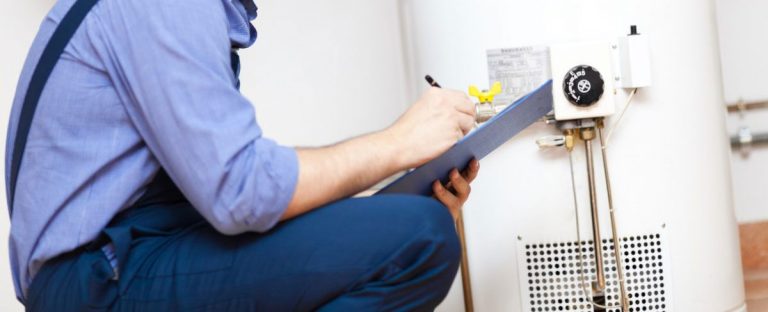
A complete annual maintenance service covers several components, not just the heat exchanger. Here is what should be inspected and serviced every year:
Descaling the heat exchanger — the most critical maintenance task. Mineral deposits are flushed from the heat exchanger using a descaling solution circulated with a pump. This restores full water flow and heating efficiency.
Cleaning the inlet filter screen — tankless units have a small filter screen on the cold water inlet that catches sediment and debris before it enters the heat exchanger. This filter should be removed, rinsed, and inspected annually. A clogged filter restricts flow and can trigger error codes.
Inspecting the pressure relief valve — the TPR valve is a safety component that releases pressure if the system exceeds safe operating limits. It should be checked to confirm it opens and closes freely.
Checking the venting system — gas tankless units vent combustion gases outdoors through a flue pipe. Blockages from debris, bird nests, or deteriorated vent connections can create dangerous backdrafting situations. Annual inspection keeps venting clear and safe.
Inspecting gas connections and burner assembly — for gas-fired units, connections should be checked for integrity and the burner assembly examined for proper ignition and flame pattern.
Checking electrical connections — loose or corroded connections can cause intermittent faults and premature component failure.
Testing system operation and reviewing error code history — modern Navien and Rinnai units log operating data that a technician can review to identify trends before they become failures.
How to Descale a Tankless Water Heater
Descaling is the core of tankless water heater maintenance. Unlike flushing a traditional tank water heater — which simply drains and refills the tank — descaling a tankless unit requires circulating a cleaning solution through the heat exchanger using a pump and hoses connected to the service valves.
Here is how the process works:
What you need:
- A submersible pump (sump pump works well)
- Two lengths of washing machine hose or reinforced hose
- A five-gallon bucket
- Food-grade white vinegar or a commercial descaling solution
- Flush kit isolation valves (these must be pre-installed on the unit — not all installations include them)
Step 1 — Shut off power or gas
For electric tankless units, turn off the breaker. For gas units, turn the gas supply valve to the off position. Do not attempt descaling with the unit powered on.
Step 2 — Shut off the water supply valves
Close both the cold water inlet valve and the hot water outlet valve on the unit. This isolates the heat exchanger from your household water supply.
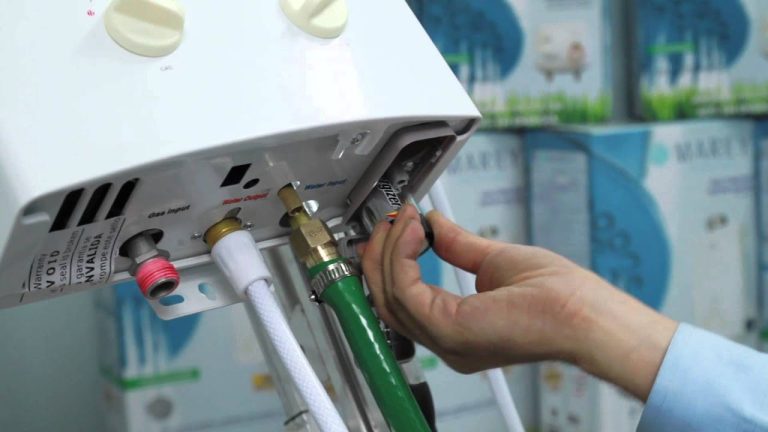
Step 3 — Connect the hoses
Attach one hose from the submersible pump in your bucket to the cold water service valve on the unit. Attach the second hose from the hot water service valve back into the bucket. This creates a closed loop through the heat exchanger.
Step 4 — Fill the bucket and run the pump
Fill the bucket with undiluted white vinegar or your chosen descaling solution. Run the pump to circulate the solution through the heat exchanger continuously for 45 to 60 minutes. The acidic solution dissolves calcium and mineral deposits from the internal channels.
Step 5 — Rinse with clean water
After descaling, empty the bucket and refill with clean water. Run the pump for another 10 to 15 minutes to rinse all descaling solution from the system before returning to service.
Step 6 — Clean the inlet filter
Remove the inlet filter screen from the cold water connection, rinse it under running water, and remove any visible debris. Reinstall before reconnecting water supply.
Step 7 — Restore water supply and power
Open the cold and hot water valves, restore power or gas, and test the unit. Run hot water at a faucet for a few minutes to purge any air from the system.
Can You Maintain a Tankless Water Heater Yourself?
Technically, yes — the descaling process outlined above is something a capable homeowner can handle if the unit was installed with service isolation valves and you are comfortable working near gas or electrical components.
However, there are important limitations to DIY tankless maintenance:
Many installations lack proper service valves. If your unit was not installed with flush kit valves on both the hot and cold connections, you cannot perform a proper descale without shutting off water to the whole system and modifying the installation first.
Vinegar is less effective than professional descaling solutions. White vinegar works for light to moderate scaling, but heavily scaled units — particularly those that have gone several years without service — often require stronger commercial descalers that are not widely available to homeowners.
DIY maintenance does not include system inspection. Cleaning the heat exchanger is only one part of annual service. Venting inspection, gas connection checks, error code review, and pressure relief valve testing require knowledge and tools that go beyond a descaling kit.
Warranty compliance may require professional documentation. Many manufacturer warranties specify that maintenance must be performed by a certified technician to remain valid. A DIY descale typically does not satisfy this requirement for Navien, Rinnai, or Bradford White tankless units.
For homeowners who are confident with basic plumbing tasks and have a properly equipped installation, annual self-maintenance between professional service visits is reasonable. For everything else, professional annual service is the more reliable choice.
Tankless vs. Tank Water Heater Maintenance: Key Differences
Homeowners switching from a traditional tank unit sometimes expect their tankless system to require less attention. In some ways it does — there is no anode rod to replace and no tank sediment to drain. But tankless maintenance is more technical:
Tank water heater maintenance involves draining sediment and checking the anode rod — tasks that can typically be done with a garden hose and basic tools.
Tankless water heater maintenance requires a pump, hoses, descaling solution, and knowledge of the unit’s specific service valve configuration. It also requires venting and gas/electrical inspection that go beyond what tank maintenance involves.
Both types benefit from annual professional service. The difference is that skipping maintenance on a tankless unit tends to show up faster in energy bills and performance, because there is no thermal buffer — the heat exchanger is doing all the work on every draw.
Navien and Rinnai Tankless Maintenance in NJ
Doctor Water Heater is a certified service provider for Navien and Rinnai tankless water heaters throughout Morris County and Bergen County, NJ. Both brands are among the most popular and reliable tankless systems on the market, and both have specific maintenance procedures that differ from generic descaling instructions.
Navien units in particular have a secondary heat exchanger in condensing models that requires attention during service. Rinnai’s commercial and residential units vary in their service valve configurations and error code systems. Our technicians are trained on both platforms and carry the appropriate equipment and descaling solutions for each.
Frequently Asked Questions
How often should a tankless water heater be flushed?
Once a year for most households. Homes with hard water or well water in the Denville and Morris County area may benefit from descaling every six months.
What happens if you never maintain a tankless water heater?
Scale builds up inside the heat exchanger, reducing efficiency and hot water output. Over time this causes error codes, component damage, and eventually system failure — often well before the unit’s expected lifespan.
How long does tankless water heater maintenance take?
A professional annual service visit typically takes 60 to 90 minutes including descaling, filter cleaning, venting inspection, and system testing.
Can I use vinegar to descale my tankless water heater?
Yes for light scaling — undiluted white vinegar circulated for 45 to 60 minutes is effective for routine annual maintenance. Heavily scaled units may require a stronger commercial descaling solution.
Does tankless water heater maintenance affect the warranty?
Yes. Most manufacturers require annual maintenance to keep the warranty valid, and some specify that service must be performed by a certified technician. Check your unit’s warranty documentation for specifics.
Schedule Tankless Water Heater Maintenance in Denville, NJ
Keeping your tankless system running at full efficiency is straightforward when it is serviced annually by a licensed professional. Doctor Water Heater provides complete tankless water heater maintenance throughout Denville, Morristown, Parsippany, Randolph, Mountain Lakes, and surrounding Morris County and Bergen County communities.
Contact us today for a free estimate on tankless water heater service, descaling, or installation.
📞 (800) 275-8433 | Denville, NJ 07834