

Key Takeaways
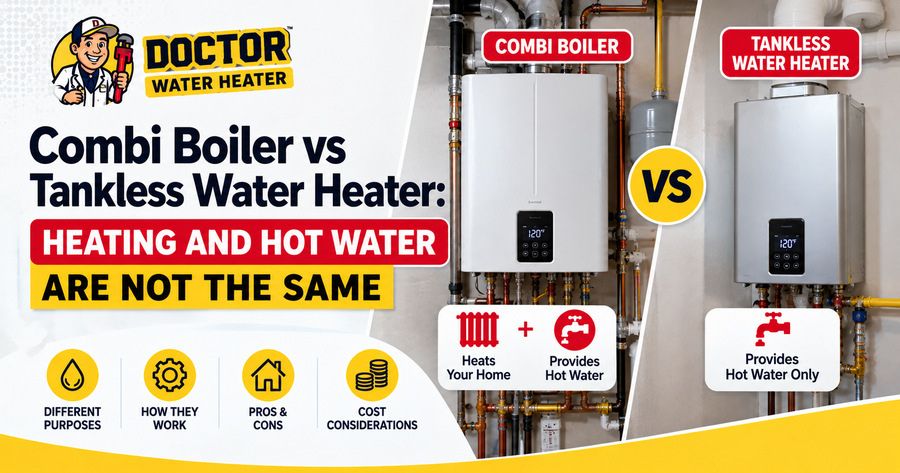
- A tankless water heater heats water for taps only, not the home.
- A combi boiler provides space heating and on-demand hot water in one unit.
- Both heat water as it flows, so neither needs a storage tank.
- A combi boiler pauses home heating while hot water runs.
- The right choice depends on how the home is heated today.
The combi boiler vs tankless water heater question comes up often because both appliances heat water on demand. They look similar on the wall, and both skip the storage tank. Their jobs, however, differ in one important way.
A tankless water heater produces hot water for showers and faucets. A combi boiler produces that same hot water and also heats the home through a hydronic system such as baseboards or radiant floors. The decision between them starts with one question: does the home need a new heat source, or only a new hot water source?
What Is a Tankless Water Heater and How Does It Work?
A tankless water heater heats water only when someone opens a hot water tap. According to the U.S. Department of Energy, cold water passes through a heat exchanger, and a gas burner or electric element heats it on the way through.
The Department of Energy lists typical output at 2 to 5 gallons per minute. Gas models generally deliver higher flow rates than electric models.
Because the unit holds no tank of stored water, it avoids standby heat loss. The Department of Energy reports that homes using 41 gallons or less of hot water per day can see 24% to 34% better efficiency than a storage tank heater.
A tankless water heater has no role in heating the home itself. A house with a tankless unit still needs a separate heating system for warmth.
What Is a Combi Boiler and How Does It Work?
A combi boiler is a single wall-hung appliance that handles two jobs. It heats water for the home’s heating system, and it heats fresh water for the taps on demand.
The combi boiler uses two separate heat exchangers. Heating water circulates through one heat exchanger and out to the heating system. When a tap opens, an internal valve routes that heat to a second heat exchanger for domestic hot water. The two water loops stay isolated from each other.
So, does a combi boiler heat the house? Yes. It serves as the home’s heating appliance and its water heater at the same time. It is compatible with baseboards and radiant floors. Its combi boilers can also serve radiators or a compatible air handler.
Combi Boiler vs Tankless Water Heater
The table below compares the two systems side by side.
| Feature | Tankless Water Heater | Combi Boiler |
|---|---|---|
| Main job | Domestic hot water | Home heating and domestic hot water |
| Heats the home | No | Yes |
| Storage tank | None | None |
| Typical setting | Any home with a separate heat source | Homes with hydronic heating |
| Equipment replaced | Tank water heater | Boiler and tank water heater |
| Behavior during hot water use | Heats water only | Pauses space heating |
Combi Boiler Hot Water Priority and Its Effect on Home Heat
This detail rarely appears in basic comparisons, yet it shapes daily comfort. Combi boiler hot water priority means the unit sends its full output to the taps whenever someone draws hot water.
Navien states that space heating shuts off while the unit runs in priority mode. The home’s heat resumes once the tap closes. Navien notes that a long shower may lower indoor temperature by a few degrees, though the effect stays small in most homes.
A tankless water heater has no such trade-off, because it never handles home heating. A separate furnace or boiler keeps running no matter how much hot water the household uses.
For most households, priority mode goes unnoticed. Homes with long, back-to-back showers on cold mornings should factor it into the decision.
Which Provides More Hot Water: Combi Boiler or Tankless?
Both systems heat water as it flows, so flow rate sets the limit on simultaneous use. The Department of Energy notes that even large gas tankless units can struggle when a shower and a dishwasher run at the same time.
Navien lists domestic hot water flow for its combi boilers at 5.4 gallons per minute at a 70°F temperature rise. Actual output depends on the model and the incoming water temperature. Colder groundwater in winter reduces the flow any on-demand unit can deliver at a set temperature.
A tankless water heater for whole-house use often needs careful sizing for this reason. The Department of Energy notes that large households can install two or more units to meet demand. Navien also allows its combi boilers to pair with its tankless water heaters for higher hot water flow.
Combi Boiler Pros and Cons
Weighing combi boiler pros and cons helps clarify whether one appliance should handle both jobs.
Advantages of a combi boiler:
- One appliance replaces both a boiler and a tank water heater.
- The wall-hung design frees up floor space in a basement or utility room.
- Fewer appliances can mean fewer vent penetrations and simpler gas piping, according to Navien.
- Condensing combi models carry high efficiency ratings, with Navien listing 95% AFUE for its current series.
Limitations of a combi boiler:
- Space heating pauses during hot water use.
- A single appliance failure can affect both heat and hot water.
- The home needs a hydronic system or a compatible air handler to use its heating side.
Which System Fits Your Home?
The existing heating system usually decides the answer.
A home with forced-air heat from a gas furnace typically needs only a water heater upgrade. A tankless water heater fits that home well, because the furnace already handles comfort heating. The comparison of tankless vs tank water heaters covers that decision in more detail.
A home with an aging boiler and a separate tank water heater presents a different case. Many owners in that position choose to replace boilers and water heaters with combi equipment in a single project. One appliance then takes over both roles, and the old tank no longer occupies floor space.
A home with a newer boiler in good condition may not benefit from a combi swap right away. Adding a tankless water heater for domestic hot water can make more sense until the boiler nears the end of its service life.
Installation and Maintenance Needs
Both appliances need correct gas line sizing and proper venting. Navien notes that its condensing combi boilers can vent with PVC because of their low exhaust temperatures. Condensing units also need a drain for condensate.
Hard water affects both systems, since minerals collect inside the heat exchanger over time. Regular descaling keeps flow and efficiency steady. A combi boiler also needs routine service on the heating side. A technician checks the heating loop pressure and inspects the venting.
Professional Combi Boiler Installation in Denville, NJ
You can select a combi boiler or a tankless water heater depending on the existing heating system and household hot water demand. Doctor Water Heater installs both combi boiler tankless systems and tankless water heaters for homeowners in Denville and across Morris County, New Jersey.
A licensed technician can review the current setup and recommend the system that fits. You can request service to schedule an evaluation.
Frequently Asked Questions
Can a tankless water heater heat a house?
A standard tankless water heater serves domestic hot water for taps and fixtures. Home heating requires a dedicated heating appliance. Any plan to use water heating equipment for space heating should go through a licensed heating professional and the manufacturer’s guidelines.
Is a combi boiler the same as a tankless water heater?
No. Both heat water on demand without a tank, but a combi boiler also heats the home. A tankless water heater handles only domestic hot water.
Does a combi boiler work with baseboard heat?
Yes. Navien lists baseboards among the heating systems its combi boilers support. Radiant floors and radiators also work with these units.
Which lasts longer, a tankless water heater or a storage tank?
The U.S. Department of Energy reports that most tankless water heaters last more than 20 years. Storage tank water heaters typically last 10 to 15 years. Water quality and maintenance affect the real lifespan of either system.