
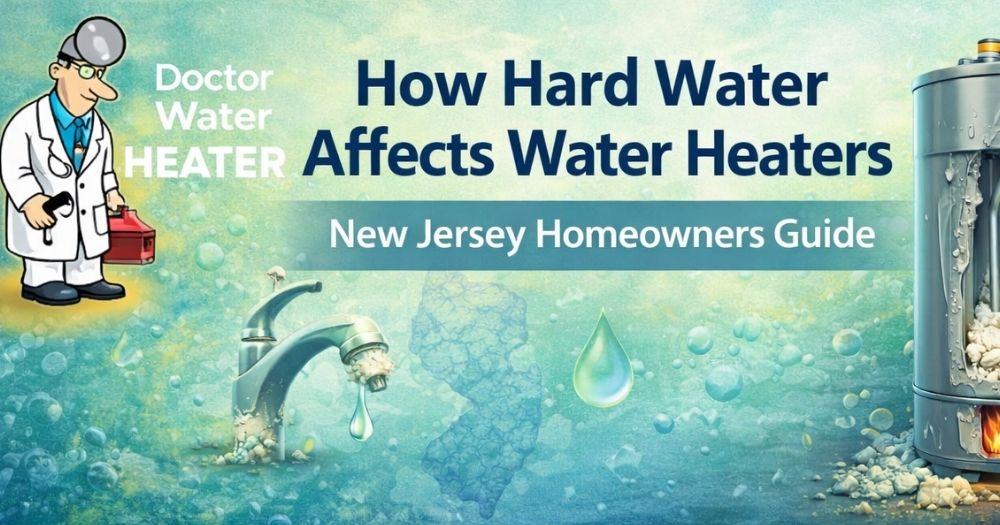
If you’ve lived in New Jersey for any amount of time, you’ve probably noticed stubborn white spots on dishes, buildup on faucets, or soap that just doesn’t lather properly. These aren’t cleaning issues — they’re signs of hard water.
And while those surface issues are annoying, what’s happening inside your water heater is far more serious. Hard water in New Jersey is actively reducing your water heater’s lifespan, increasing your energy bills, and leading to expensive repairs or early replacement.
Understanding Water Hardness in New Jersey
Water hardness is measured by the amount of dissolved minerals, mainly calcium and magnesium. While the national average sits around 120 ppm, many areas in New Jersey exceed that — with some locations reaching over 200–300 ppm.
This means homeowners across Bergen County, Morris County, and Essex County are dealing with hard to very hard water every single day.
How Hard Water Damages Your Water Heater
When water is heated, dissolved minerals separate and form solid deposits known as sediment or scale. This buildup settles at the bottom of your tank and coats heating elements.
Over time, this leads to:
- Reduced heating efficiency
- Higher energy bills
- Longer heating times
- Increased wear on components
- Shortened system lifespan
In New Jersey, this process happens much faster than in softer-water states.
What Happens to Your Water Heater Over Time
Years 1–3
Light sediment buildup begins forming. Performance is mostly unaffected.
Years 4–6
Scale buildup increases. Heating becomes less efficient, and energy bills may rise by 10–15%.
Years 6–8
Heavy sediment buildup acts as insulation, forcing your system to work harder. Energy costs can increase by 20–30%.
Years 8–10
Your water heater is now under significant strain. In hard water conditions, systems often fail years earlier than expected.
Without proper maintenance, hard water can reduce a water heater’s lifespan by up to 40%.
The Hidden Cost of Hard Water
Hard water doesn’t just damage your system — it costs you money every month.
- $264–$540 per year in wasted energy
- Early replacement costs due to reduced lifespan
- Unexpected repair expenses
If you wait until failure, emergency replacements can cost significantly more than planned upgrades. Learn more about water heater replacement cost in New Jersey.
Why New Jersey Homes Are More Affected
New Jersey presents unique challenges that make hard water even more damaging:
- Older homes with aging plumbing systems
- Heavy winter usage increasing demand on systems
- Mineral-rich groundwater in many regions
- Variations in municipal water hardness
This combination accelerates sediment buildup and system wear.
What’s Happening Inside Your Water Heater Right Now
If your system hasn’t been serviced recently, there is likely a layer of sediment building inside your tank. This reduces efficiency and increases strain on your system.
Regular maintenance, such as an annual water heater checkup, can help prevent serious damage and extend your system’s life.
How to Protect Your Water Heater
1. Annual Flushing
Flushing removes sediment buildup and improves performance. You can learn the process in this guide on how to flush and drain a water heater, but professional service is recommended in New Jersey.
2. Replace the Anode Rod
The anode rod protects your tank from corrosion. In hard water areas, it should be replaced every 3–5 years.
3. Install a Water Softener
A water softener removes minerals before they reach your system, reducing sediment buildup and improving efficiency.
4. Plan Ahead for Replacement
If your unit is over 8–10 years old, it’s smart to start planning for water heater replacement in New Jersey before failure occurs.
How to Extend Water Heater Lifespan in NJ
Taking proactive steps can significantly extend the life of your system. For a complete strategy, read our guide on how to maximize water heater lifespan.
When Should You Take Action?
- Under 5 years old: Start maintenance early
- 5–8 years old: Schedule inspection and flushing
- 8–10 years old: Begin planning replacement
- 10+ years old: Replace before failure
Don’t Let Hard Water Destroy Your Water Heater
Hard water is one of the biggest hidden threats to your home’s plumbing system. But with the right maintenance and planning, you can avoid costly repairs and extend your system’s life.
Schedule Your Water Heater Inspection Today
Doctor Water Heater provides expert water heater services across New Jersey, including Bergen County, Morris County, and Essex County.
Schedule a water heater inspection today and protect your system before problems start.
Frequently Asked Questions About Hard Water and Water Heaters
How does hard water damage a water heater?
Hard water forms sediment when heated, which builds up inside the tank and reduces efficiency while increasing wear on components.
Is New Jersey water really that hard?
Yes. Many areas in New Jersey have moderate to very hard water, often exceeding national averages.
How often should I flush my water heater in New Jersey?
At least once per year. In hard water areas, regular flushing is essential to prevent buildup.
Does a water softener help extend water heater life?
Yes. It reduces mineral buildup and helps your system run more efficiently.
How long do water heaters last in hard water?
In New Jersey, water heaters often last 8–10 years without proper maintenance, compared to 12–15 years in softer water regions.