
Key Takeaways
- A healthy relief valve should not discharge water during normal use.
- Small and frequent drips are a sign of thermal expansion.
- Heavy hot water flow can signal overheating and needs immediate action.
- Mineral deposits can stop the valve from closing or opening.
- Never plug or cap the valve or its discharge pipe.
A water heater pressure relief valve leaking is never a problem to ignore. The valve has to release water when pressure or temperature inside the tank climbs too high.
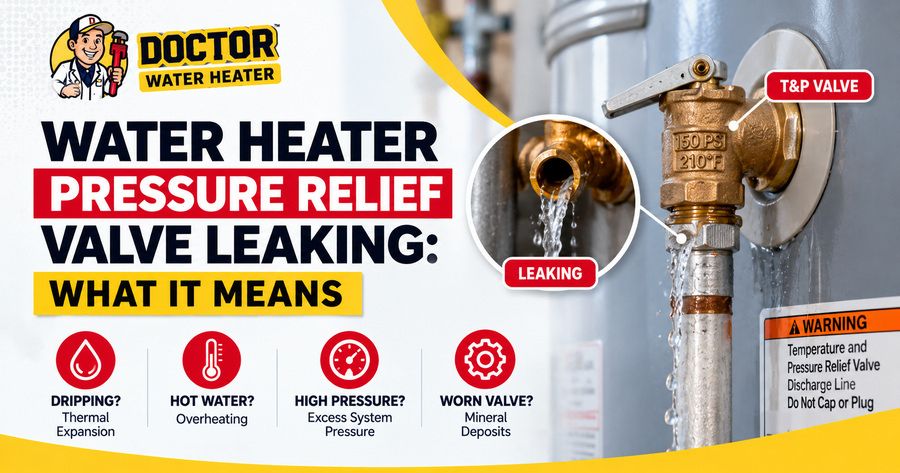
The temperature and pressure relief valve, often called the T&P valve, sits on the top or upper side of a tank water heater. A pipe runs from the valve toward the floor or to a safe drain point. According to Watts, a leading valve manufacturer, residential T&P valves typically open at 150 psi or 210°F.
What a Water Heater Relief Valve Does
The T&P valve serves as the final safety device on a tank water heater. It responds to two separate conditions. Pressure above the valve rating pushes it open, and so does water temperature at or above its temperature rating.
A probe on the valve extends into the tank. This probe must sit in the top 6 inches of the tank, where the hottest water collects. Under normal conditions, no water should flow from the valve. Any discharge may point to an unsafe temperature or pressure condition.
Common Causes of a Leaking Pressure Relief Valve
Thermal Expansion in a Closed System
Water expands as it heats. A 40-gallon heater expands by about half a gallon of water as it reaches its thermostat setting.
In many homes, that extra volume can flow back into the city main. A backflow preventer or check valve on the main blocks that path and creates a closed system. The expanding water then has nowhere to go, so pressure inside the tank rises with each heating cycle.
The relief valve responds by opening briefly to release the extra pressure. The result is a water heater relief valve dripping in short bursts, often after the burner or elements shut off.
High Incoming Water Pressure
Some homes receive high water pressure from the street. A tank that starts at high pressure has less room to absorb thermal expansion. When water heater pressure is too high, the valve can open even during a normal heating cycle.
A pressure gauge on an outdoor faucet or the heater drain valve reveals the real number. Use a test gauge to help confirm a thermal expansion problem.
Overheating From a Failed Control
A thermostat or gas control valve can fail and keep heating the water past its setting. As the temperature approaches 210°F, the valve opens to release the superheated water.
This type of discharge usually comes out hot and in large volume. Steam or hissing may follow. Treat this as an urgent safety problem, not a minor leak.
A Worn or Dirty Valve
The valve itself can fail. Take note that mineral deposits can build up on the valve and block its waterways. Deposits on the valve seat can also stop the valve from closing fully, which causes a constant slow drip. Homes with hard water face this risk more often.
Relief Valve Leak Patterns and The Indication
The way the valve leaks offers a strong clue about the cause. Use this table as a starting point for a professional diagnosis.
| Leak Pattern | Likely Cause | Indication |
|---|---|---|
| Short drips after each heating cycle | Thermal expansion | The closed system needs expansion control |
| Constant slow drip | Worn seat or mineral deposits | The valve may need replacement |
| Drip that starts after a manual test | Debris on the valve seat | The valve did not reseat fully |
| Heavy flow of very hot water | Overheating | A failed control needs urgent repair |
| Water at the threads, not the outlet | Loose fitting or corrosion | The connection or tank opening needs inspection |
T&P Valve Leaking After Testing
Many homeowners notice a T&P valve leaking after testing it for the first time in years. Lifting the lever can dislodge mineral flakes that settle on the valve seat. Once the lever snaps back, that debris may hold the valve slightly open.
A second test sometimes flushes the debris clear. If the drip continues, the valve has likely reached the end of its service life.
How to Test a Water Heater Relief Valve
Owners should test the lever at least once a year. Here is how to test a water heater relief valve safely:
- Place a bucket under the end of the discharge pipe.
- Keep hands and feet clear of the outlet, since the water exits very hot.
- Lift the test lever for a few seconds, then let it snap back into place.
- Confirm that water flows freely and stops after you release the lever.
If no water comes out, the waterways may be blocked, and the valve cannot protect the tank. If water keeps flowing, the valve did not reseat. Both results call for a licensed plumber.
We recommend a full inspection at least once every three years by a licensed plumbing contractor. During that inspection, the contractor removes the valve and checks it for corrosion.
Is a Leaking Relief Valve Dangerous?
Many homeowners ask whether a leaking relief valve is dangerous. The leak itself rarely causes harm, but its cause can.
A valve that releases pressure is doing its job. The real danger comes from a valve that cannot open at all. An overheated heater with no way to vent may explode.
For this reason, never plug the discharge pipe or cap the valve to stop a drip. That step removes the only protection against a dangerous pressure buildup.
Frequent discharges can weaken the valve’s safety function over time. A repeating drip deserves a fix at the source, not a towel under the pipe.
How Professionals Fix a Leaking Relief Valve
The repair depends on the cause, so a plumber starts with a pressure reading and a look at the system. For thermal expansion, use a potable water expansion tank as the preferred fix. A thermal expansion tank for water heater systems gives the extra water volume a safe place to go.
For high street pressure, a plumber may install or adjust a pressure-reducing valve on the main line.
For a worn valve, the answer is to replace water heater pressure relief valve hardware with a new valve of the correct rating. The new valve must match the heater’s temperature and pressure ratings, and it must have the correct relief capacity.
For overheating, the technician repairs or replaces the failed thermostat or gas control.
Discharge Pipe Rules
The discharge pipe matters as much as the valve. There are multiple requirements for a safe discharge line:
- The pipe must match the valve outlet size.
- The pipe must slope downward from the valve.
- No shut-off valve or obstruction may sit anywhere along the line.
- The end of the pipe should remain visible so any discharge gets noticed.
When a Leak Points to Replacement
A relief valve leak alone rarely means the whole heater needs replacement. Age and tank condition change that answer. Rust around the valve opening, or water seeping from the tank body, signals a deeper problem.
Get Water Heater Leak Repair Near Denville NJ
A relief valve leak calls for a pressure reading and a valve inspection. The heater controls need a check as well. Doctor Water Heater provides water heater repair and leaking water heater service for homeowners in Denville and across Morris County, New Jersey.
Contact us now to schedule an inspection!
Frequently Asked Questions
Why is my water heater pressure relief valve leaking?
A water heater pressure relief valve leaking usually points to thermal expansion or a worn valve. High incoming water pressure can produce the same symptom. Overheating from a failed thermostat or gas control can also open the valve. A pressure gauge reading and a valve inspection help confirm the exact cause.
Can I shut off the water heater if the relief valve leaks?
A large flow of hot water from the valve calls for shutting off the heater’s power or gas supply. Close the cold water supply to the heater as well. Leave the discharge pipe open, and contact a licensed plumber before restarting the unit.
How often should a relief valve be replaced?
Experts recommend inspection by a licensed contractor at least once every three years. During that inspection, the contractor removes the valve and replaces it if corrosion or buildup appears. Any valve that drips constantly or fails a lever test needs replacement.
Does a thermal expansion tank stop relief valve drips?
An expansion tank stops drips caused by thermal expansion in a closed system. It gives the heated water extra room, so pressure stays below the valve rating. It does not fix a worn valve or a failed heater control.
Is it safe to plug a dripping relief valve?
No. Plugging or capping the valve removes the heater’s last line of protection against excess pressure. A heater that cannot vent can fail violently, so the leak needs a proper repair instead.