
You probably don’t think much about your water heater until it stops working. When that happens and you’re facing a replacement, you’ve got a lot on your mind. But before you call a plumber or start planning a DIY installation, here’s a question you can’t afford to ignore: do you need a permit to replace your water heater?
The answer across most of the United States is a definitive yes. And while getting a permit might feel like an extra hassle and cost, it’s actually one of the most important decisions you can make for your home’s safety and your family’s wellbeing.
Do You Need a Permit to Replace a Water Heater?
Yes. In most cities and counties across the United States, replacing a water heater requires a permit and inspection. These requirements are based on national building standards such as the International Residential Code (IRC) and the Uniform Plumbing Code (UPC), which many states and municipalities adopt as part of their local regulations.
Water heaters involve gas lines, electrical wiring, water pressure, and ventilation systems. Because of these safety factors, building departments require permits to ensure installations meet current code requirements and are installed safely.
Although permit rules can vary slightly by city or county, the vast majority of homeowners across the United States will need a permit before replacing a water heater. Many states also require municipalities to perform inspections after installation to confirm that the unit meets plumbing and mechanical safety standards.
The permit process isn’t simply bureaucracy. When you apply for a permit, you are requesting an official inspection of the installation. That inspection confirms the work meets current building codes and that critical safety components, such as the temperature and pressure relief valve, venting system, and gas or electrical connections are properly installed.
For example, in New Jersey, water heater replacements must be permitted and inspected according to state and local plumbing regulations. Utility providers such as PSE&G and municipalities enforce these rules to ensure installations are safe and compliant with building codes.
Why Permits Exist and What They Protect
Before you dismiss the permit requirement as red tape, understand what it actually protects you from.
Safety First
A properly installed water heater is a safe appliance. An improperly installed one is a hazard. Water heaters involve three major risk categories: gas, electricity, and high pressure. Any of these can go wrong in dangerous ways if installation doesn’t follow code.
For gas water heaters, improper venting or gas line connections can lead to carbon monoxide leaks, which are deadly and often undetectable without proper equipment. A pressure relief valve that isn’t correctly installed can fail to activate when pressure builds up inside the tank, potentially causing an explosion. Electrical water heaters require properly sized wiring and breakers, and incorrect installation creates fire risks.
During a permit inspection, the building inspector verifies that safety features are working correctly. They check that the temperature and pressure relief valve is installed with a proper discharge pipe. They confirm that thermal expansion tanks are present if required in your area. In earthquake-prone regions, they verify seismic straps are securing the tank properly to the wall. These aren’t optional features. They’re the difference between a safe installation and a dangerous one.
Insurance Coverage
Here’s something that keeps homeowners up at night: if your unpermitted water heater causes damage to your home, your homeowner’s insurance can legally deny your claim. Think about that for a moment. If your water heater leaks and floods your basement, causing thousands of dollars in damage, your insurance company might refuse to pay because the work wasn’t permitted.
Insurance companies have specific language in their policies about unpermitted work. From their perspective, unpermitted work is unauthorized work, and they’re not obligated to cover damage from unauthorized installations. You could end up paying for thousands of dollars in repairs yourself simply because you skipped the permit.
Home Sale Protection
If you ever sell your home, this matters enormously. When a buyer’s home inspector examines your property, they look for unpermitted work. A water heater installation that wasn’t permitted and inspected will be flagged in the inspection report. Suddenly, what seemed like a small shortcut becomes a negotiation nightmare.
Buyers will demand that you either secure a retroactive permit and pass inspection, or they’ll ask for a significant discount to cover the cost of replacement. Some buyers will walk away entirely, unwilling to purchase a home with unpermitted work that might have code violations. What seemed like saving a few hundred dollars on the permit could end up costing you thousands during the sale.
What Happens If You Don’t Get a Permit?
The consequences of skipping the permit process go beyond just the ones listed above.
Your local building department can issue fines for unpermitted work. These aren’t minor penalties either. Some jurisdictions impose fines of several hundred dollars for each day work is performed without a permit. In extreme cases, they can require you to remove the unpermitted unit and start over with a proper permit and inspection. This turns what should have been a straightforward replacement into an expensive and frustrating ordeal.
Beyond official penalties, you’re gambling with your family’s safety. Without the inspection, there’s no independent verification that your installation meets code. If something goes wrong, you have no way to prove the work was done correctly. If a guest gets injured because of a code violation in the installation, you could be liable.
How Much Does a Permit Cost?
The cost of a water heater permit is usually quite reasonable. In most jurisdictions, expect to pay between $50 and $200, depending on your local municipality. Some areas charge based on the project cost, while others charge a flat fee.
Think of this as insurance. That relatively small fee guarantees that an experienced building inspector has reviewed your installation and confirmed it meets current code requirements. It’s far less expensive than dealing with the aftermath of an unpermitted installation gone wrong. When you’re looking at water heater replacement costs anyway, the permit is a minimal additional expense.
The Permit Process Explained
So how does getting a permit actually work? The process is straightforward, which is why there’s no good reason to skip it.
If you hire a licensed, professional plumber, they handle the entire permit process for you. They submit the application to your local building department, pay the fee, and schedule the inspection. This is a standard part of professional service. When you get quotes from plumbers, the permit fee should be listed separately so you understand exactly what you’re paying for.
Once installation is complete, a building inspector visits your home. The inspection usually takes less than 15 minutes. The inspector checks critical safety items: the relief valve installation, proper venting, gas line connections (if applicable), electrical work (if applicable), and that the unit is properly secured.
If everything passes inspection, your permit is closed and you’re done. You have official documentation that the work meets code requirements. This documentation becomes part of your home’s records and comes in handy if you sell in the future.
If you want to understand the entire installation process, our complete guide to water heater replacement explains how professionals remove the old unit, install the new system, and handle permits and inspections.
Can You Do This as a DIY Project?
In many jurisdictions, homeowners can legally pull a permit for work done on their own primary residence. Some areas require licensed plumbers to pull permits. The first thing to do is call your local building department and ask about requirements in your area.
If you’re planning a DIY installation, keep in mind that pulling a permit as the homeowner makes you responsible for the entire installation. You’re legally declaring that you understand the code requirements and that your work will meet them. When the inspector comes out, your work is held to the exact same standards as a professional installation. There are no shortcuts or exceptions.
Our article on whether you can replace a water heater yourself covers this decision in detail, including practical considerations for different skill levels.
When Do You Definitely Need a Permit?
Some situations always require permits, even more definitively than standard replacements:
Upgrading from a tank water heater to a tankless system almost always requires a permit because tankless units have different venting and gas or electrical requirements. Changing fuel types, such as switching from electric to gas, requires a permit because it involves new gas line installation or electrical work. Moving the water heater to a different location in your home requires plumbing and possibly venting modifications, which require permits. Adding seismic straps in earthquake-prone regions requires proper installation that’s verified by inspection.
If your project involves any changes beyond simply swapping the old unit for a new one of the same type and fuel, you need to assume a permit is required.
Water Heater Permits in New Jersey: What You Need to Know
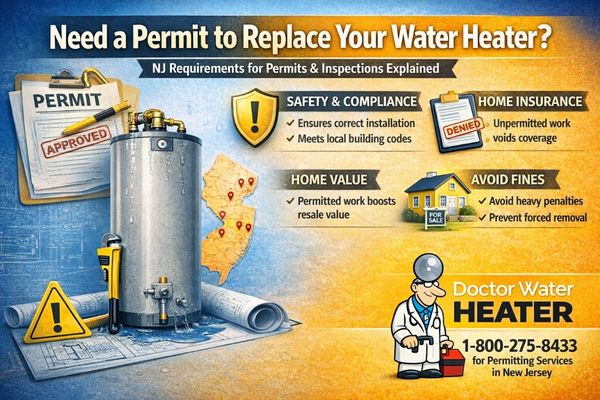
If you’re a homeowner in New Jersey, including Morris County, Bergen County, Essex County, and surrounding areas, the permit requirement is crystal clear. New Jersey state law requires that any water heater replacement be properly permitted and inspected by your local building department.
Whether you hire a licensed water heater replacement plumber or attempt a DIY installation, you cannot legally skip this step. New Jersey municipalities are particularly strict about this, and for good reason. The state takes plumbing and mechanical safety seriously, and water heater installations fall squarely under these regulations. Licensed plumbers in New Jersey are required to be registered with their local municipalities and must obtain a permit before beginning any water heater work. If you’re a homeowner doing the work yourself, you’ll need to apply for the permit directly with your local building department and provide proof of homestead exemption.
The work must comply with New Jersey’s adopted plumbing codes and ordinances, which are based on the International Residential Code and include specific requirements for venting, gas line installation, electrical work, and safety valves. To understand exactly how New Jersey’s codes apply to your situation and what compliance looks like, our comprehensive guide on plumbing code compliance for New Jersey homeowners covers all the specifics you need to know before starting your replacement project.
Hiring a licensed water heater replacement plumber in New Jersey ensures your installation follows local building codes and passes inspection the first time.
At Doctor Water Heater, we handle water heater replacements and permit compliance for homeowners across New Jersey every day, which is why we strongly recommend never skipping the inspection process.
What to Ask Your Plumber
When you’re getting quotes for water heater replacement, ask these specific questions:
Is the permit fee included in your quote, or is it separate? A transparent contractor will list it separately so you know exactly what you’re paying. Will you be obtaining the permit and scheduling the inspection? This should be automatic for any licensed professional. Do you have experience with my local building department’s requirements? Licensed plumbers know the specific codes in their area. Do you guarantee that the work will pass inspection? Any professional worth hiring should stand behind their work.
If a plumber suggests skipping the permit to save money, that’s a red flag. It tells you they’re willing to cut corners on safety to offer a lower price. That’s not someone you want working on a safety-critical appliance in your home.
Professional Installation Makes Sense
This is one reason why hiring a professional plumber makes so much sense. They know the permit requirements for your area. They understand local codes. They have relationships with local building departments and inspectors. They handle the paperwork and scheduling. Most importantly, they install the unit correctly the first time and stand behind their work with proper permits and inspections.
For water heater replacement services that include proper permitting and inspection, you can learn more about what to expect from professional installation.
If you’re planning to replace your unit, working with professional water heater replacement services in New Jersey ensures the permit, installation, and inspection are handled correctly from start to finish.
What Happens If You Replace a Water Heater Without a Permit?
Replacing a water heater without obtaining the required permit can create several serious problems for homeowners. While it may seem like a way to save time or avoid permit fees, skipping the permit process can lead to legal, financial, and safety risks.
First, your local building department may issue fines or penalties for unpermitted work. In many municipalities, inspectors can require the installation to be inspected retroactively, and in some cases they may even require the unit to be removed and reinstalled under a proper permit.
Second, insurance coverage can become a major issue. If an unpermitted water heater causes water damage, fire, or gas-related problems, your homeowner’s insurance company may deny the claim because the installation was not approved by the local building authority.
Third, unpermitted work can create complications when selling your home. Home inspectors often check permits for major appliances and plumbing work. If the water heater replacement was not permitted, buyers may demand that the issue be corrected or request a price reduction before completing the sale.
Most importantly, skipping the permit means skipping the safety inspection. Permits ensure that critical components such as pressure relief valves, venting systems, and gas or electrical connections are installed correctly and meet building code requirements.
For these reasons, replacing a water heater without a permit is rarely worth the risk.
FAQs:
Do I need a permit to replace a water heater in New Jersey?
Yes. New Jersey requires permits and inspections for water heater replacements to ensure installations meet plumbing and safety codes.
How long does it take to get a water heater permit?
In most municipalities, a water heater permit can be issued the same day or within one business day. If a licensed plumber is handling the installation, they typically obtain the permit and schedule the inspection as part of the replacement process.
Who pulls the permit for water heater replacement?
In most cases, the licensed plumber performing the installation pulls the permit with the local building department. If you are installing the water heater yourself, you may need to apply for the permit directly as the homeowner.
What happens during a water heater inspection?
During the inspection, a building inspector verifies that the installation meets local safety and plumbing codes. This includes checking the temperature and pressure relief valve, proper venting, gas or electrical connections, discharge piping, and that the unit is securely installed.
Do tankless water heaters require permits?
Yes. Installing a tankless water heater almost always requires a permit because the installation often involves changes to gas lines, venting systems, or electrical connections that must meet building code requirements.
How much does a water heater permit cost in New Jersey?
In most New Jersey municipalities, a water heater replacement permit typically costs between $75 and $200, depending on the town and whether plumbing, electrical, or gas inspections are required. Licensed plumbers usually include the permit cost as part of the installation process.
Is replacing a water heater considered plumbing work?
Yes. Water heater replacement is classified as plumbing work in most building codes. Because it involves water supply lines, pressure safety devices, and sometimes gas or electrical connections, permits and inspections are usually required.
The Bottom Line
A permit for your water heater replacement isn’t an optional extra or bureaucratic hassle. It’s a critical safety checkpoint that protects your family and your home. It’s documentation that the work meets current code requirements. It protects your insurance coverage and your home’s resale value.
The cost is minimal. The peace of mind is invaluable. Any reputable plumber includes permits as a standard part of their service. If you’re doing the work yourself, calling your local building department to understand the requirements is the first step.
When you’re ready to move forward with a professional water heater replacement that includes proper permitting and inspection, our team at Doctor Water Heater can guide you through the entire process. We handle all the permits, all the paperwork, and all the inspections so you can have complete confidence in your new water heater’s safety and reliability.
Call Doctor Water Heater at 1-800-275-8433 for plumbing code compliance inspections and upgrades in New Jersey areas such as Denville, Randolph, Wayne, Mountain Lakes, Livingston, Montville, Wayne, Paramus, Franklin Lakes and throughout New Jersey.
Protect your home and your investment today.