

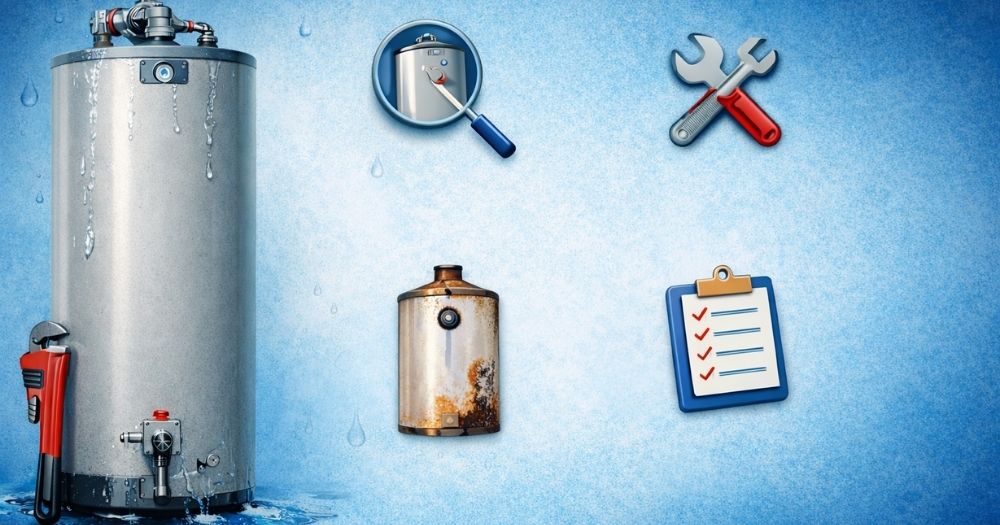
Discovering a puddle of water around your water heater can be stressful. The good news? Not every leak means you need a full replacement. Many water heater leaks are fixable with some basic troubleshooting, and understanding where the water is coming from makes all the difference.
Let’s walk through how to diagnose and fix a leaking water heater so you can get back to enjoying hot water without the worry.
First Things First: Is It Really a Leak?
Before you panic, make sure you’re actually dealing with a leak. Sometimes what looks like water damage is just condensation. This happens when cold water enters a hot tank, causing moisture to form on the outside surface.
Here’s how to tell the difference: Dry off your water heater completely and watch it closely over the next few hours. If moisture reappears evenly across the entire surface, you’ve got condensation, which is totally normal and not a problem. If water pools in a specific area or continues dripping, then you’re dealing with an actual leak.
Also check if nearby appliances like your furnace, air conditioning unit, or water softener could be the culprit. Use paper towels to help identify exactly where the water is coming from.
Identifying Where the Leak Is Coming From
The location of the leak tells you a lot about how serious the problem is and what you’ll need to do about it.
Leaks from the top usually come from loose pipe connections, faulty valves, or the temperature and pressure relief valve (also called the T&P valve). These are the easiest to fix and typically don’t require replacing your entire unit.
Leaks from the bottom could be coming from the drain valve, sediment buildup, or the tank itself. The drain valve is a simple spigot used during maintenance, and a leak there is usually an inexpensive fix. However, if water is pooling directly under the tank, the situation may be more serious.
Leaks along the side often indicate a problem with the T&P valve or internal corrosion that’s weakening the tank.
Common Causes and How to Fix Them
Loose Pipe Connections
Over time, the connections where pipes attach to your water heater can loosen due to thermal expansion and normal wear and tear. This is one of the easiest problems to solve.
The fix: First, turn off the water supply by locating the shut-off valve above your heater and turning it clockwise. Then, using a wrench, gently tighten the connection nuts at the cold water inlet and hot water outlet. Be careful not to overtighten, as this can damage the threads and actually cause more problems. Once tightened, turn the water back on and check if the leak stops. If it persists, the fittings may need to be replaced by a professional.
Problems with the Drain Valve
The drain valve at the bottom of your tank is designed to let you empty the heater during maintenance. When this valve starts leaking, it’s usually because it’s either loose or corroded.
The fix: Start by attempting to tighten the valve using a wrench. If tightening doesn’t stop the leak, the valve likely needs to be replaced. This is a relatively inexpensive repair that any professional plumber can handle quickly.
High Pressure from the T&P Relief Valve
Your water heater includes a temperature and pressure relief valve as a safety feature. This valve automatically releases water if pressure inside the tank gets too high. If you see water dripping from this valve, it could mean your thermostat is set too high.
The fix: Check your thermostat setting. The Department of Energy recommends setting your water heater to 120 degrees Fahrenheit. If your setting is higher, lower it to this recommended temperature and see if the leak stops. If the temperature is already set correctly and water continues to leak, the valve itself is likely faulty and needs professional replacement.
Sediment Buildup and Tank Corrosion
Mineral deposits and sediment accumulate over time, especially if you have hard water. This buildup can cause corrosion on the inside of your tank, leading to leaks.
The fix: Try flushing your water heater. Turn off the water and power supply, attach a hose to the drain valve at the bottom, and let water drain into a floor drain or bucket. This removes sediment buildup and can sometimes stop minor leaks. After draining, refill the tank and power it back on. If the leak stops, you’ve solved the problem. If it continues, the tank is likely corroded and needs replacement.
Regular annual flushing can prevent this issue altogether.
Damaged or Cracked Tank
A leak coming from the side or bottom of the tank itself is the most serious problem. Internal corrosion, manufacturing defects, or stress from water pressure can cause cracks.
The fix: Unfortunately, there’s no good way to repair a cracked or heavily corroded tank. The best course of action is replacement. If your water heater is over 10 years old and leaking from the tank, replacement is usually more cost-effective than attempting repairs anyway.
When to Call a Professional
Some leaks you can tackle yourself, but others really do need professional expertise. Call a licensed plumber if:
You have a leak coming from the tank itself rather than connections or valves. The leak is severe and continuing despite turning off the water supply. You’re uncomfortable working with your water heater or aren’t sure what’s causing the leak. Your water heater is over 10 years old and leaking. You need to replace the T&P valve or other internal components.
Preventing Future Leaks
The best water heater maintenance is prevention. Here’s what you can do:
Flush your tank annually to remove sediment buildup. Check your water heater regularly for signs of corrosion or loose connections. Keep the area around your heater clear for proper ventilation and easy inspection. Ensure your thermostat isn’t set above 120 degrees. Consider installing a pressure-reducing valve if your water pressure is particularly high.
The Bottom Line
A leaking water heater doesn’t automatically mean replacement. By taking time to identify where the water is coming from and what’s causing the problem, you can often fix it with simple adjustments or inexpensive component replacements. However, if your heater is aging or the leak is serious, replacement might be the most practical solution in the long run.
When in doubt, calling a professional plumber gets you accurate diagnosis and peace of mind. They can assess whether your leak is a quick fix or a sign that it’s time for a new water heater.
Don’t let a leaking water heater cause water damage to your home. Address the problem promptly, and you’ll keep your hot water flowing without interruption.